The recycling line — only when reuse fails.
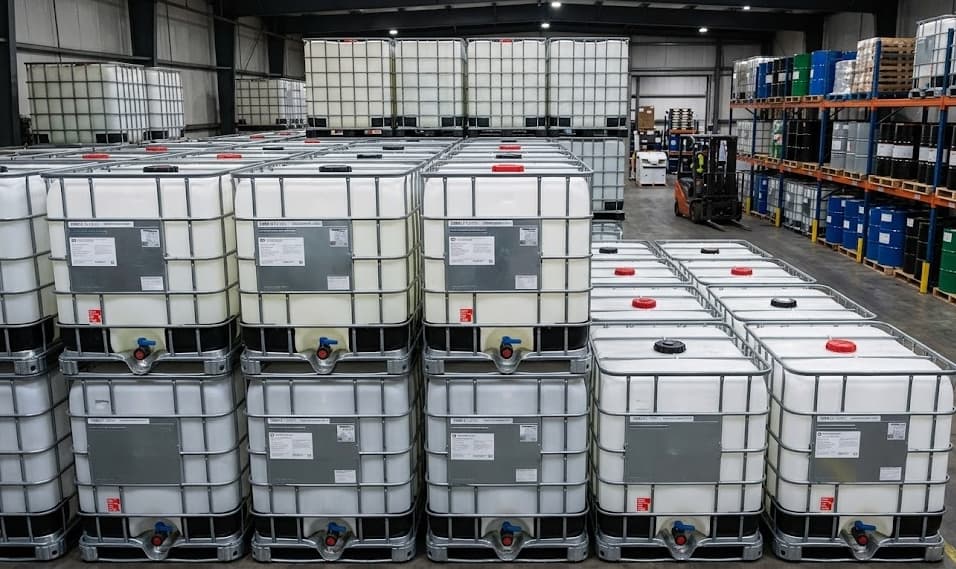
About 6% of the totes that come into our yard are genuinely end-of-life — split bottles, permeated chemistry, terminally cracked from years of UV. Those go to our on-site granulator. Bottles that can be saved never see this room.
Recycling pickup or drop-off
Same form, every page. Tell us what you've got or what you need; we send a real quote (not a sales drip).
The line, step by step
- Cage / pallet separation. Steel cages and wood/poly pallets are pulled and routed back to reuse — not recycled.
- Bottle wash. A heated rinse cycle to flush residual chemistry. Wash water is treated and reclaimed.
- Granulation. 30 mm screen output. We typically run a single-color batch to maintain regrind value.
- Wash + dry. Float-tank separation removes any non-HDPE contaminants.
- Pelletize. Single-screw extruder with 50 lb/hour throughput. Cooled, cut, bagged.
- Sale. Pellets ship to North-American molders within 300 miles. Used in new tote bottles, drainage pipe, irrigation, automotive parts.
The pledge
No regrind ever leaves North America.
We won't sell to brokers we can't audit. We won't ship to a country with no recycling infrastructure. If it can't be molded into something new on this continent, we don't grind it.
If you have totes that aren't reusable
- Drop them off any weekday at the yard ($0 fee for >5 totes).
- Pickup on a route ($0 fee for >15 totes).
- Pickup off-route (small fee — call for quote).
- We'll never charge you for taking end-of-life HDPE off your hands if you're already on a route.
The downstream — where regrind goes
About 60,000 kg of regrind exits our yard per year. It splits roughly between three downstream uses:
- Drainage and irrigation pipe (40%). Regrind HDPE is excellent for drainage and irrigation tubing. We sell to two regional pipe extruders within a 200-mile radius.
- New IBC bottles (30%). Regrind is blended at 20-30% with virgin to make new HDPE bottles for new IBCs. Full circle.
- Automotive trim (20%). A regional automotive supplier uses regrind for non-cosmetic interior trim parts.
- Other industrial molding (10%). Various smaller buyers — agricultural equipment, recycling bins, marine.
All buyers are within North America. None are brokers. We have direct supply agreements with each, and we audit them periodically (in the simple sense — visit, walk the floor, confirm what they're doing with the material).
What gets retired (and what doesn't)
About 6% of incoming totes have bottles that are genuinely end-of-life. The criteria:
- Hairline crazing across the bottom. Pattern of fine surface cracks; will leak within months. End-of-life.
- Permeation staining bonded into the polymer. Chemistry is gone but residue remains. Industrial-only at best, often end-of-life.
- Bottom seam failure. Already cracked or visibly weakened. End-of-life.
- Chemical embrittlement. Bottle wall makes a tap-tap noise instead of a thud. End-of-life.
- Severe outdoor UV degradation. Yellowing past a certain point + brittleness. End-of-life.
About 94% of bottles get reused. We work hard to keep this number high — the most carbon-efficient thing we can do is keep the bottle alive, not recycle it.
Drop-off, pickup, partnerships
Walk-in drop-off
Any weekday during yard hours. Up to 5 totes free, no questions; larger drops free if reasonably clean and identifiable. We can issue a receipt for tax/CSR documentation.
Scheduled pickup
For 15+ totes, we'll route a pickup against an existing run. No fee for usable totes; small fee ($1-2/tote) for end-of-life pickup that's off-route.
Generator partnership
For chemical distributors and industrial generators with steady end-of-life flow, we set up a recurring pickup contract (often combined with our buy-back program). Fixed schedule, predictable costs.
Audit-grade documentation
For corporate sustainability audits, we provide: weight tickets, batch trace, downstream destination of the regrind, and (on request) the audit reports from our regrind buyers. This level of documentation is unusual in the industrial recycling space; most recyclers won't tell you where the material ends up.
FAQ — recycling specifically
Why don't you export regrind?
Because the global polymer-export market routinely lands material in countries with no real recycling infrastructure, where it ends up in waterways and beaches. North-American molders pay slightly less than overseas brokers, but the math has to be honest. We'd rather take the lower price.
Can you recycle other plastics besides IBC bottles?
We're set up specifically for HDPE from IBC bottles. Other rigid HDPE we can take in small quantities; mixed plastic, no — there are better recyclers for that.
What about cages and pallets?
Cages get reused (94% rate); the 6% that fail get sold by the ton to a local steel buyer. Wood pallets get reused; the broken ones go to a regional pallet repair company. Poly pallets get washed and reused.
Do you accept totes that previously held hazardous materials?
Depends on the chemistry. Some yes, some no. Email us a copy of the SDS and we'll tell you within a day.
Can you provide recycling documentation for sustainability audits?
Yes. We can issue weight tickets, batch trace, and downstream destination records for companies that need audit-grade reporting on where end-of-life HDPE went.